Operational costs keep rising, and every minute of unplanned downtime is a direct hit to your bottom line. The longer your trucks stay on the road, the more revenue keeps coming in, so uptime should be a top priority.
This guide delivers a clear, actionable roadmap to help your fleet achieve the highest vehicle availability. You’ll learn practical productivity and downtime reduction strategies, along with proven approaches to fleet management and efficiency, inspection, vehicle maintenance and repairs, and preventive maintenance.
Why Downtime Is Such an Expensive Problem
Unplanned downtime can cost fleets hundreds of dollars per day, and the losses add up quickly when multiplied. One day of downtime for a single truck can cost $400 or more. Stretch that over a week or a month, and you’re looking at thousands in lost revenue before you even factor in repairs.
Those direct costs are only part of the picture. Indirect expenses such as expedited freight, customer penalties, missed delivery windows, and strained relationships can push the total even higher.
A reactive maintenance approach worsens the problem. Without proactive service, more of your time and budget go toward emergency repairs, after-hours service calls, towing fees, and rush-ordered parts. Routine maintenance typically ranges from $5,000 to $8,000 per year, while unexpected repairs can reach $10,000 to $25,000 annually. Emergency work almost always costs more than scheduled service. Towing alone can add hundreds or even thousands to a single incident.
Effects on Fleet Productivity and Efficiency
Downtime affects more than just your trucks. Miss a delivery, and customer relationships may end up strained. Since disrupted schedules are one of the primary reasons drivers leave jobs, you can’t afford to leave vehicle performance to chance.
Every truck pulled for unscheduled repair reduces your fleet’s velocity and revenue capacity. Effective productivity and downtime reduction strategies help you keep your trucks on the road.
Preventive Maintenance Strategies for Fleet Management
Usage-based preventive maintenance programs work best because they trigger services according to real-world vehicle data. You can match maintenance intervals to how vehicles actually operate, accounting for variations in duty cycles, operating environments, and load profiles.
Importance of Regular Vehicle Inspections
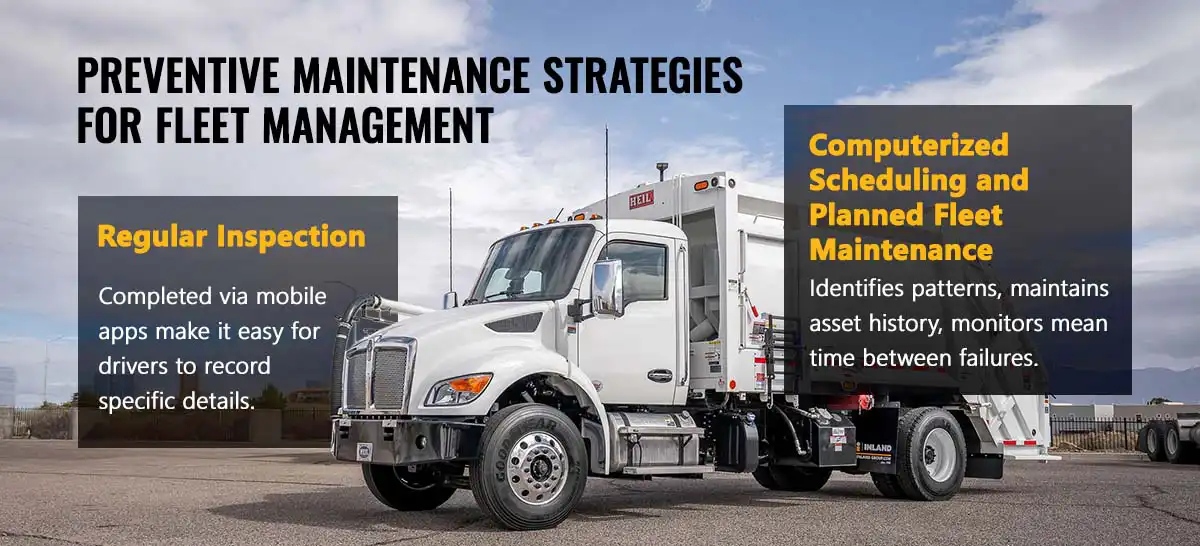
Regular inspections are the first and most critical part of any proactive strategy. Commercial vehicle inspections completed via mobile apps make it easy for drivers to record specific details. The reports store notes and timestamped photos of brake pushrod stroke measurements, tire tread depth, air system leaks, suspension wear, and electrical faults.
Proactive inspection and preventive maintenance practices catch small issues, such as bad tires or brake wear, before they become catastrophic roadside failures. Regular fleet inspections reduce downtime while enabling strong regulatory compliance. Digital systems also create an auditable record that supports warranty claims and regulatory audits.
Scheduling and Planning Fleet Maintenance
Moving from a reactive model to a structured, scheduled preventive maintenance program takes consistency and specialized software. Start with a usage-based schedule that automatically generates work orders when trucks meet thresholds for mileage, engine hours, or performance data.
A computerized maintenance management system tracks preventive maintenance completion rates. The system also maintains a complete asset history, monitors mean time between failures, and identifies patterns across the fleet so you can act on them faster.
Reducing Maintenance Costs While Maximizing Efficiency
Smart maintenance balances cost control with disciplined execution, so maintenance becomes a competitive advantage rather than a budget drain.
Cost-Effective Repairs and Services
Proactive maintenance programs can noticeably reduce your maintenance costs compared to reactive approaches. Regularly scheduled services using high-quality original equipment manufacturer and premium aftermarket parts lower your fleet’s lifetime costs.
A ratio of 80% preventive to 20% reactive maintenance is considered excellent. Budget components may cost less up front, but early failures and repeated repairs eventually outgrow any savings while adding unplanned downtime.
Training Drivers and Operators
Driver behavior directly affects vehicle health and maintenance costs. Telematics data can identify and correct bad habits that accelerate wear on brakes, tires, and transmissions, such as hard braking, aggressive acceleration, excessive idling, and improper gear selection.
Well-trained drivers get better mileage between breakdowns, reduced wear and tear, and improved reliability. Investing in driver coaching and training pays off with lower incident rates and extended maintenance intervals. Driver turnover also improves with fewer maintenance disruptions.
How to Manage Fleet Downtime Effectively
Telematics and predictive tools transform your fleet operations by providing real-time visibility and early warning capabilities that shift maintenance from reactive to predictive.
Leveraging Technology in Fleet Management
Modern telematics data goes far beyond GPS tracking, giving you actionable insights into your fleet’s fuel efficiency, engine health, and fault codes that help your managers predict failures before they happen. Fleet management systems monitor fault codes, engine health, brake performance, fluid levels, and sensor data in real time.
Predictive analytics identify potential failures such as wheel-end or diesel particulate filter issues before they occur. Once you know what needs attention, you can schedule service during planned downtime rather than forcing unplanned stops. Tools such as Drivewyze add weigh station bypass and location-specific safety alerts.
Building a Contingency Plan
Some downtime is inevitable, even with the best preventive maintenance strategy. Partnering with Inland gives you access to expert technicians and a large inventory of original equipment manufacturer (OEM) and aftermarket parts to help get your vehicles back on the road as quickly as possible. Rental options can help you maintain operations while a truck undergoes repairs.
For leased or rented vehicles, our fleet packages with 24/7 roadside assistance offer additional support, including remote troubleshooting to assess issues and determine next steps, potentially saving you a trip to the shop.
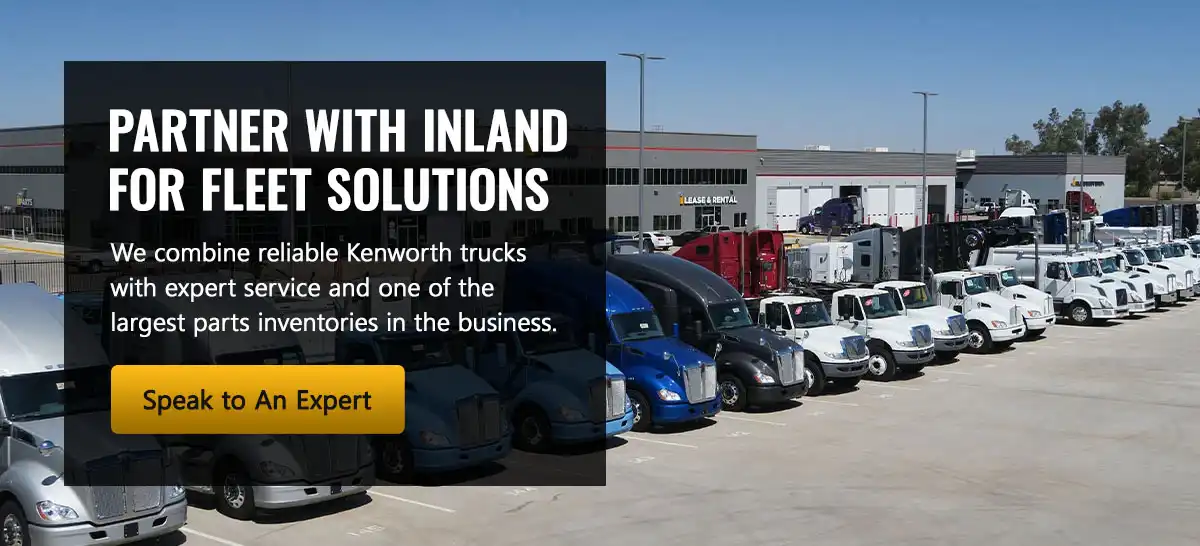
Partner With Inland for Fleet Solutions
Inland provides the support you need to successfully implement these productivity and downtime reduction strategies. We combine reliable Kenworth trucks with expert service and one of the largest parts inventories in the business.
Our state-of-the-art service centers deliver expert preventive maintenance, fleet inspections, and repairs for all makes and models. With flexible lease and rental options and tiered fleet maintenance packages, Inland serves as a trusted partner for maximizing uptime and long-term fleet potential.
Visit your nearest Inland location and speak to an expert about how we can help you keep your trucks on the road longer and reduce your downtime costs.