

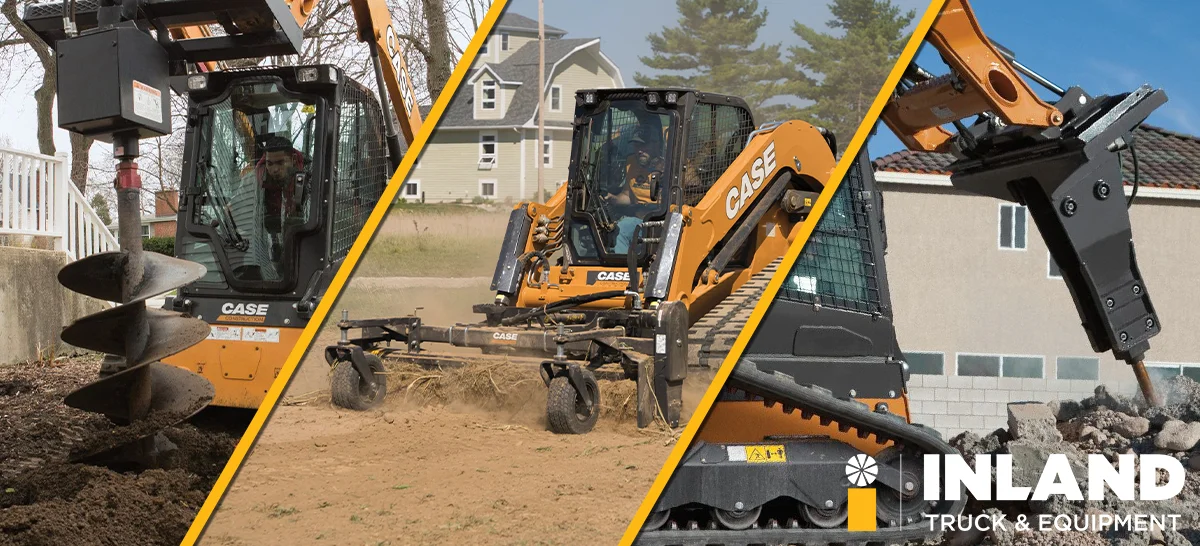
If you run a construction site, you know the skid steer is the Swiss Army knife of your fleet. But let’s be honest: a skid steer without attachments is just a bucket on wheels. To truly unlock the profit potential of your machine, you need the right tools. Whether you are grading a driveway, drilling post holes for a fence, or clearing heavy snow, there is an attachment designed to turn that single machine into a multi-purpose powerhouse.
In this guide, we are diving deep into the world of skid steer loader attachments. We will move beyond the basic bucket and explore the specific tools that can save you hours of manual labor and thousands of dollars in equipment rental fees. We will cover compatibility, breakdown the must-have tools by industry, and give you the maintenance tips that keep your gear running season after season. Let’s get to work.
Table of contents
- Understanding Skid Steer Attachment Compatibility
- Must-Have Earthmoving Attachments
- Top Excavation Attachments
- Essential Material Handling Attachments
- Land Management and Forestry Attachments
- Snow Removal and Winter Attachments
- Specialized Attachments for Concrete and Demolition
- Landscaping and Surface Prep Tools
- High-Flow vs. Standard-Flow: Which Do You Need?
- How to Choose the Right Skid Steer Attachments
- Maintenance Tips to Extend Attachment Life
- Unlock the Full Power of Your Skid Steer
- Frequently Asked Questions
Understanding Skid Steer Attachment Compatibility
Before you swipe your credit card for a new hydraulic hammer, you need to know if your machine can actually run it. Compatibility is the most critical factor in buying attachments, yet it’s where many contractors make expensive mistakes.
The “Universal” Myth
Most modern loaders use the Universal Skid Steer Quick Attach (SSQA) system. While the mounting plate might physically fit, that doesn’t mean the attachment will work. You must verify three things:
- Hydraulic Flow (GPM): Your machine’s gallons per minute must match the attachment’s requirements.
- Pressure (PSI): The hydraulic pressure must be sufficient to power the tool without blowing seals.
- Rated Operating Capacity (ROC): Can your machine lift the attachment plus the load without tipping?
Pro Tip: Don’t just check the maximum flow; check the minimum required flow. Running a high-performance attachment on the bare minimum flow usually results in sluggish performance that kills efficiency.
Must-Have Earthmoving Attachments
Earthmoving is the bread and butter of most skid steer operations. While the standard bucket is standard for a reason, specialized attachments can speed up grading and excavation significantly.
4-in-1 Buckets
The 4-in-1 bucket (often called a multi-purpose bucket) can dig, load, carry, and dump. But its real magic lies in its ability to open up like a clam to grapple debris or back-drag for grading. It eliminates the need to switch between a grapple and a bucket for light cleanup jobs.

Dozer Blades
Turning your skid steer into a mini-bulldozer is easier than you think. Dozer blades are perfect for backfilling trenches or rough grading. Look for blades with 6-way adjustability (lift, tilt, and angle) to give you the precision needed for final grading tasks.
Top Excavation Attachments
When you need to go below the surface, manual labor is the enemy of profit. These attachments replace the guy with the shovel, allowing you to dig precise footings and utility lines in a fraction of the time.
Augers
For fencing contractors and deck builders, skid steer auger drives are non-negotiable. They offer torque that hand-held units can’t touch, allowing you to bore accurate holes through clay, cobble, and even frozen ground. However, not all augers are built the same.
- Chain Drive: More economical and faster for light-to-moderate soil conditions. Ideal for standard farm fencing and landscaping.
- Planetary Drive: Uses a gear system to generate massive torque. If you are drilling into rock, asphalt, or frozen ground, you need a planetary drive to avoid stalling.
Trenchers
Why rent a dedicated walk-behind trencher when your skid steer can do it faster? A skid steer trencher attachment is the ultimate tool for laying irrigation lines, electrical conduit, or drain tile. Unlike an excavator bucket, a trencher removes the minimum amount of soil necessary, making backfilling easier and keeping the job site cleaner.
- Depth and Width: Most units can dig trenches from 2 to 5 feet deep and 6 to 12 inches wide.
- Side-Shift Capability: Look for a manual or hydraulic side-shift feature. This allows you to slide the trencher to the far right or left of the machine, enabling you to dig trenches tight against building foundations or fences.
- Chain Selection: Just like augers, the teeth matter. Use a standard “cup chain” for soft dirt, but switch to a “shark tooth” chain with carbide tips if you are dealing with rocky soil or roots.
- Operational Note: Trenching requires consistent low speed. If your skid steer isn’t equipped with a “creeper gear” or speed control, you will need a steady hand on the controls to maintain a smooth trenching speed without stalling the attachment.
Essential Material Handling Attachments
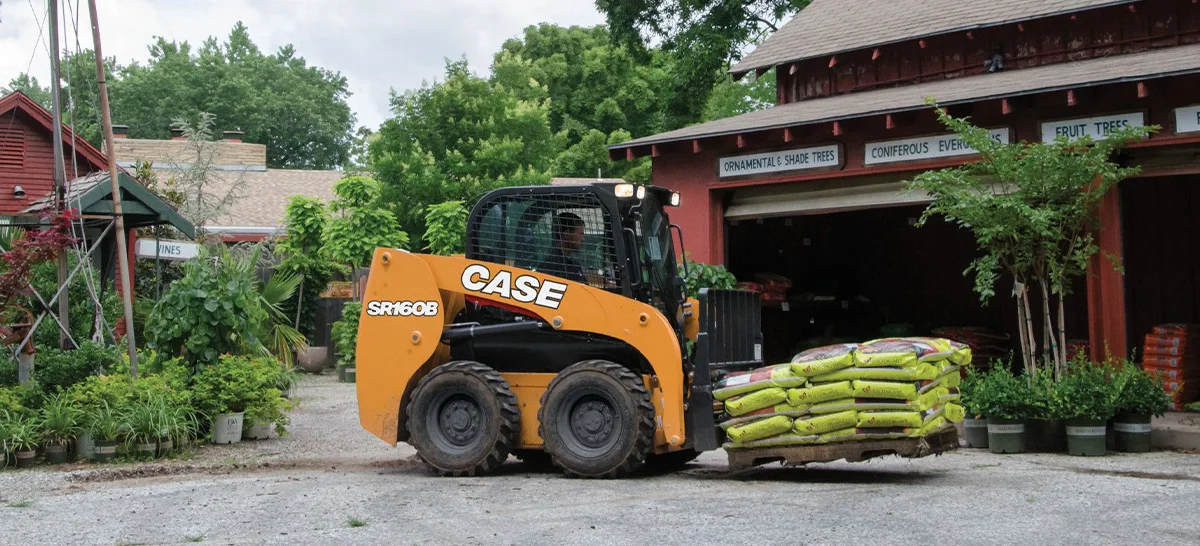
Material handling isn’t confined to the warehouse. On active construction sites where uneven terrain, loose soil, and tight corners are the norm, a standard forklift simply can’t compete. A skid steer offers the stability and power to transport heavy pallets directly to the point of need, effectively turning your loader into a rough-terrain logistics solution.
Pallet Forks
Skid steer pallet forks are arguably the second most important attachment after the bucket. They allow you to offload trucks and move materials around tight job sites.
Safety Note: Always check the rated operating capacity (ROC). A skid steer’s lift capacity decreases the further the load center is from the machine.
Industrial Grapples
When you’re moving uneven or awkward materials such as scrap metal, logs, or demolition debris, a standard bucket may not provide secure handling. Grapples use independently actuated hydraulic arms to clamp and stabilize irregular loads, reducing the chance of shifting during transport. Utility, construction, and logging configurations are common, allowing you to choose a design suited to your application.
Land Management and Forestry Attachments
For land clearing, fire prevention, and site prep, high-powered hydraulic tools are essential. This is where “High Flow” machines really shine, converting hydraulic horsepower into raw cutting speed.
Brush Cutters
A brush cutter attachment is essentially a heavy-duty mower that slices through tall grass and saplings up to 2-10 inches thick. It’s great for initial clearing. There are two types of brush cutters to consider:
- Rotary Cutters: These operate like a giant lawnmower with a horizontal spinning blade. They are aggressive and fast, making them ideal for clearing large, open acreages of scrub brush. Look for an “open front” deck design if you need to cut down small trees; the open throat allows the tree to contact the blades directly without bending over.
- Flail Mowers: Instead of one large blade, a flail mower uses a drum with many small, swinging hammers. They provide a finer mulch finish and are safer to use near roads or buildings because they are less likely to throw dangerous debris like rocks or wood chunks.
Forestry Mulchers
When you need to make trees disappear, the forestry mulcher attachment is the industry standard. Unlike a cutter that leaves stumps and downed timber, a mulcher grinds standing trees (up to 6-14 inches in diameter) and stumps directly into the soil. This leaves behind a carpet of biomass that suppresses weed growth and prevents erosion.
Teeth Selection:
- Carbide Teeth: These are blunt and incredibly durable. They grind the wood rather than slicing it. Choose carbide if you are working in rocky soil or unknown terrain where hitting a stone is inevitable.
- Steel “Knife” Teeth: These are sharp and slice through wood aggressively, leaving a finer finish and working faster. However, they are fragile; hitting a single rock can chip or dull the edge, requiring immediate sharpening or replacement.
The High-Flow Requirement: Mulchers are hungry for power. They almost always require a high-flow hydraulic system (typically 20–45 GPM) and a machine with high hydraulic pressure (3,000–4,000 PSI). Using a mulcher on a standard flow machine will result in constant stalling and poor rotor recovery speed.
Snow Removal and Winter Attachments
Don’t let your fleet sit idle in winter. For Canadian contractors, snow removal is often the difference between a profitable year and breaking even. However, choosing between a pusher and a blower depends entirely on your site conditions and where that snow needs to go.
Snow Pushers and Blowers
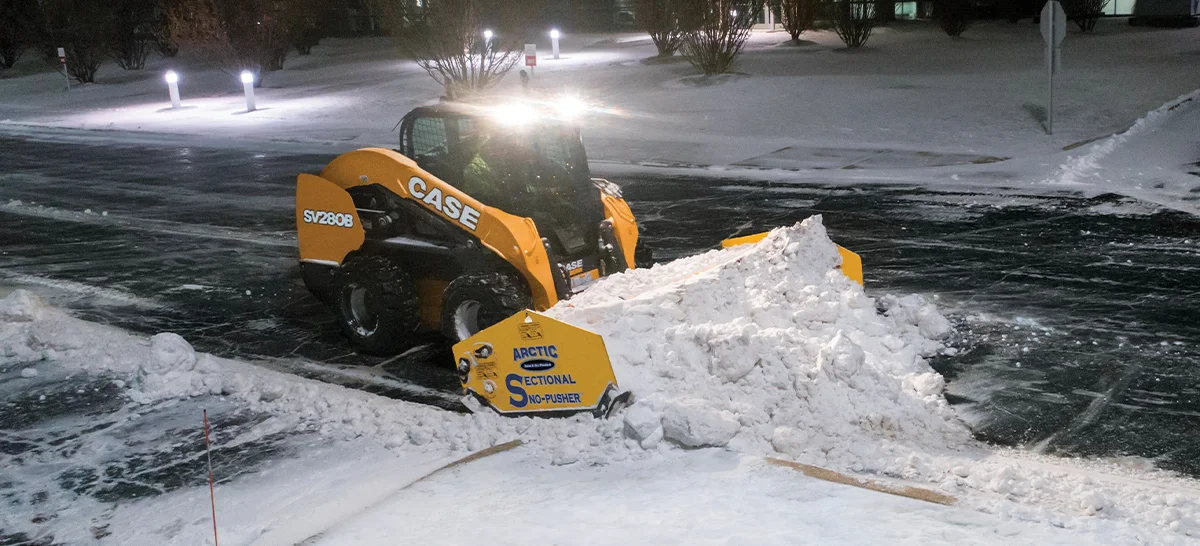
A skid steer snow pusher (or box plow) is designed for speed and volume. Unlike a standard angle blade that lets snow spill off the sides, a pusher utilizes side wings to capture and contain the snow, allowing you to clear large, open parking lots in fewer passes.
When you run out of room to pile snow, or you need to clear narrow driveways without creating massive banks, the snow blower is superior. These attachments intake snow and shoot it through a directional chute, allowing you to displace snow 25 to 45 feet away—effectively “stacking” it over fences or deep into landscaping.
Note: Hydraulic snow blower efficiency depends heavily on your machine’s GPM.
Specialized Attachments for Concrete and Demolition
Demolition requires brute force, and concrete work requires precision. These tools deliver both.
Hydraulic Breakers
The hydraulic breaker for skid steer (or hammer) turns your loader into a powerful demolition rig. It is the most efficient tool for vertical demolition, perfect for breaking up driveways, sidewalks, removing foundation footings, or cracking through frozen ground in the dead of winter.
Maintenance Note: Breakers are hard on equipment. Greasing the attachment every 2 to 4 hours of use is critical to prevent failure.
Concrete Mixers
For fencing contractors, patio installers, and small-batch concrete jobs, the skid steer concrete mixer bucket is a massive cost-saver. It eliminates the dreaded “short load fees” from batch plants and saves the back-breaking labor of using a portable wheelbarrow mixer.
Landscaping and Surface Prep Tools
Finishing touches make the project. These tools leave the site looking professional.
Landscape Rakes and Tillers
A power rake (or Harley rake) is the gold standard for preparing a seedbed. It pulverizes soil, removes rocks, and grades in one pass. A tiller breaks up hard-packed clay, making it ready for sod or seed.
Cold Planers
For contractors tackling road repair or driveway restoration, a cold planer (or pavement miller) is a game-changer that eliminates the need for a dedicated milling crew. These attachments use a rotating drum with carbide teeth to mill down asphalt and concrete, making them indispensable for pothole repair, smoothing frost heaves, or cutting utility trenches. While standard-flow models can handle shallow surface texturing and line removal, serious asphalt milling and deep cuts require a high-flow skid steer to maintain drum speed under load.
Brooms / Sweepers
A clean job site is a safe job site, and nothing tidies up faster than a sweeper attachment. You typically have two choices: an angle broom, which sweeps debris to the side (ideal for clearing long driveways or light snow), and a pickup broom (or sweeper bucket), which collects dirt and debris into an attached hopper for easy disposal. For urban contractors, the pickup broom is often preferred for dust control and keeping debris off public roads.
Soil Conditioner
Often called a “Harley rake,” a skid steer soil conditioner is the ultimate tool for seedbed preparation and finish grading. Unlike a standard tiller that just churns dirt, a soil conditioner uses a powered drum to pulverize soil clumps while separating and windrowing rocks and debris to the side. It allows you to grade, level, and dethatch in a single pass, creating the perfect, fluffy soil texture needed for sod or hydroseeding.
High-Flow vs. Standard-Flow: Which Do You Need?
This is the most common question we receive.
- Standard Flow (17-25 GPM): Sufficient for buckets, grapples, augers, and pallet forks.
- High Flow (30-45+ GPM): Required for attachments that need constant, high-power rotation, such as forestry mulchers, cold planers, and large snow blowers.
Pro Tip: Buying a high-flow attachment for a standard-flow machine is a waste of money. Although the attachment may function, they won’t have the torque to cut or grind effectively.
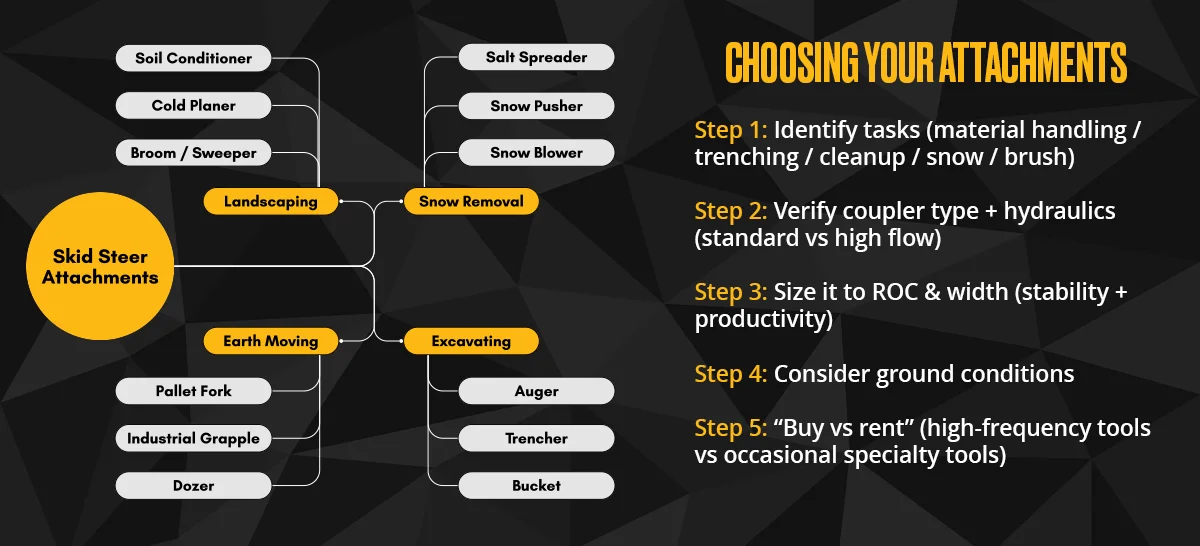
How to Choose the Right Skid Steer Attachments
- Step 1: Identify tasks (material handling / trenching / cleanup / snow / brush)
- Step 2: Verify coupler type + hydraulics (standard vs high flow)
- Step 3: Size it to ROC & width (stability + productivity)
- Step 4: Consider ground conditions
- Step 5: “Buy vs rent” logic (high-frequency tools vs occasional specialty tools)
Maintenance Tips to Extend Attachment Life
Hydraulic attachments are expensive investments. Here are some recommendations we have to ensure your skid steer attachments last for years to come:
- Clean Couplers: Wipe your flat-faced couplers before connecting. Dirt in the hydraulic system is the #1 cause of pump failure.
- Grease Daily: If it moves, grease it. Pivot points on grapples and buckets need daily attention.
- Check Hoses: Look for abrasions or leaks. A blown hose on a job site shuts you down instantly and spills hazardous fluid.
Unlock the Full Power of Your Skid Steer
Investing in the right skid steer attachments can transform your business from a seasonal operation to a year-round enterprise. Whether you are clearing land with a forestry mulcher or keeping roads safe with a snow blower, the right tool makes all the difference. Remember, the goal isn’t just to have the most toys—it’s to have the most efficient tools that pay for themselves.
However, even the best attachment needs a reliable machine powering it. Whether you need a high-flow compact track loader for heavy-duty forestry work or a nimble wheeled skid steer for general landscaping, we have the right machine for you.
Ready to upgrade your fleet’s capabilities? For over 75 years, Inland Truck & Equipment has been a leader in heavy equipment solutions. Don’t leave compatibility to chance—let our experts help you select the ideal skid steer loader and match it with the specific attachments you need to maximize your ROI. Contact our sales team today or browse our new and used inventory to get started.
Frequently Asked Questions
Generally, no. While they might physically connect, a standard-flow machine cannot provide the volume of hydraulic fluid needed to spin the attachment at effective speeds. It will lack torque and likely stall under load.
Typically, no special license is needed beyond standard heavy equipment operator certification required by your local jurisdiction or employer. However, specialized attachments like planers or forestry heads require specific training to operate safely.
If your machine was manufactured after the mid-1990s (Bobcat, Cat, John Deere, Kubota, etc.), it likely has the Universal Skid Steer Quick Attach (SSQA). However, mini skid steers and very old models use proprietary mounts.
After the standard bucket, a set of pallet forks or a 4-in-1 bucket offers the most versatility. They allow you to handle materials, grade, and clear debris without needing specialized, single-purpose tools.