

Canadian winters are notoriously harsh and long-lasting. The coldest days can plummet to between minus 10 and minus 30 degrees Celsius. These low temperatures result in high costs for heavy equipment owners and operators. If your equipment is not in shape to withstand the extreme cold, you may experience higher failure rates, increased repair and maintenance costs, and prolonged operational downtime.
Avoid these consequences and extend your fleet’s longevity and reliability by performing a comprehensive winterization. Use this guide as your winter readiness plan.
Why Heavy Equipment Winterization Is Nonnegotiable
When you fail to winterize equipment like heavy snow plows, you may experience adverse consequences.
- Increased downtime costs: Cold weather has numerous negative effects on machinery. Every hour of downtime translates to project delays and emergency repairs, ultimately resulting in lost revenue.
- Elevated repair expenses: Without proper winter prep, machinery and its components can become damaged in various ways. Their repairs and replacements can be more expensive than the cost of preventive maintenance.
- Compromised safety risks: When equipment malfunctions, it poses a safety risk to operators and anyone on the jobsite.
Your Winter Truck Readiness Checklist
Comprehensive Canadian winter truck preparation starts with a systematic approach to ensure each system is ready to tackle the severe cold.
Fluids and Lubrication
Cold temperatures thicken fluids, increasing their viscosity. And when fluids flow more like honey than oil, they struggle to circulate throughout your equipment. Slow circulation puts strain on your engine and hydraulic systems, making operations significantly more sluggish — or even halting them completely.
Here’s what you can do to prevent this from happening.
- Select engine oil: Your engine components need proper lubrication to start in the cold, so you should switch to a winter-grade oil with a lower viscosity level. Look for the number before the “W” on the product’s container for its viscosity rating.
- Test antifreeze or coolant: Always test the coolant in your machine. A refractometer gauges whether the coolant can handle the lowest anticipated temperatures. If it cannot, replace it with the correct mixture and test again.
- Choose hydraulic fluid: You want the hydraulic fluid to flow easily. Switch to a multi-viscosity hydraulic fluid that performs well across a wide range of temperatures. Alternatively, use a winter-weight hydraulic fluid that uses a thinner that flows better in cold weather.
- Lubricate grease points: Thoroughly lubricate Zerk fittings and other lubrication points with a synthetic, low-temperature grease. Doing so will prevent moisture from accumulating, which would otherwise cause freezing and corrosion.
Fuel System
Though diesel is the king of heavy equipment, it remains susceptible to extreme cold because of its high torque capabilities. The paraffin wax in diesel fuel can solidify in cold weather, clogging fuel lines and filters and preventing your machine from working.
Here are a few diesel truck winter maintenance tasks.
- Use winter-blend fuels: Switch to a specifically formulated winter blend before the cold weather arrives. Winter-blend fuels typically contain No. 1 diesel, a lighter and more refined fuel with lower viscosity.
- Use fuel additives: Consider using fuel additives to enhance performance. Anti-gel additives prevent wax crystal formation by lowering the diesel’s cloud point and cold filter plugging point. Cetane boosters enhance ignition quality, resulting in smoother cold starts.
- Drain water separators: Drain your water separators daily — otherwise, the water will freeze and cause ice blockages in fuel lines. A blockage will starve the engine of fuel and thus cause stalls and power losses.
- Keep tanks full: When you keep your fuel tank full, it leaves less room for warm, moist air to enter. Less air minimizes the chances of condensation from occurring once temperatures drop, thus reducing the amount of water in your fuel system.
Battery and Electrical System
Frigid weather places high demand on batteries. Lower temperatures slow down chemical reactions and lower capacity and performance, which will damage your equipment’s battery over time.
Here are a few steps to keep your battery and electrical system well-maintained and winter-ready.
- Test the battery: Severe cold is a double whammy for your batteries, reducing their power output and making the engine harder to crank. Use a load tester to check battery health, and only operate heavy machines when you’re certain their batteries are in good condition.
- Clean connections: Batteries naturally produce small amounts of hydrogen gas during charging and discharging cycles, which reacts with the surrounding atmosphere and leaves a powdery buildup. This corrosion is a poor conductor of electricity and increases resistance in the circuit. If you don’t remove it, it will shorten the battery’s lifespan.
- Inspect block heaters: If your machinery has block heaters, inspect them regularly. Check the cords, heater unit, thermostat, and connections. Consider retrofitting if you don’t have block heaters, as they pre-warm the engine block and internal fluids when not in use.
Tires, Tracks, and Brakes
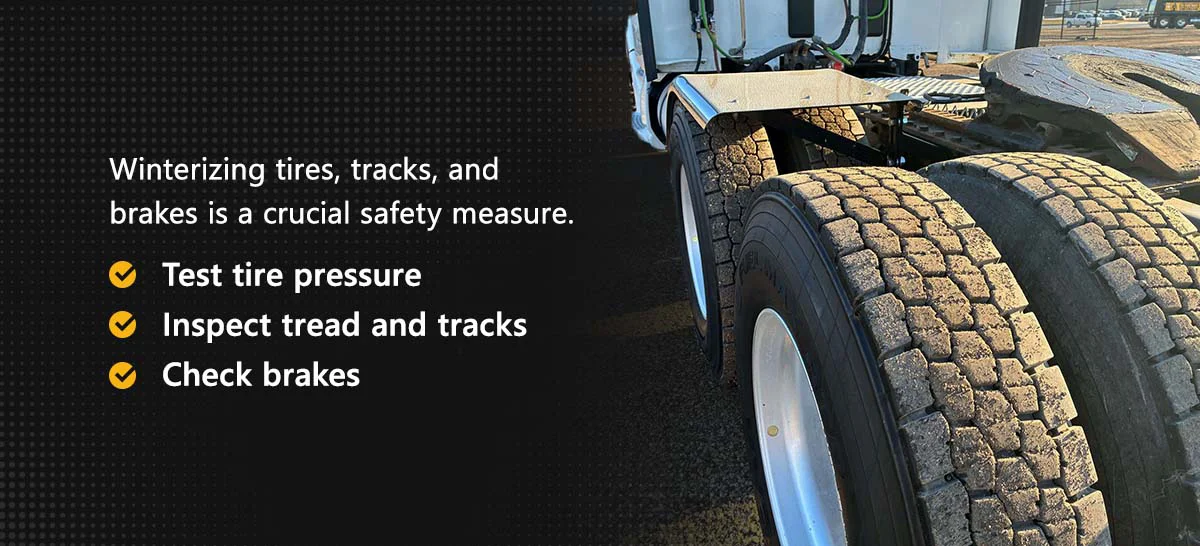
Since snow and ice bring the risk of heavy equipment losing traction or control, winterizing tires, tracks, and brakes is a crucial safety measure.
- Test tire pressure: Because cold air is denser, tire pressure tends to drop. Underinflated tires deform, reducing their contact with surfaces and compromising their grip and control over the equipment. Always check each tire’s pressure before using.
- Inspect tread and tracks: Check your tires for adequate tread depth to maintain safe traction. Measure it using a quarter or a tread depth gauge, which is more accurate. The legal tread depth limit is 1.6 millimeters. Inspect tracked machinery for proper track tension and clear the undercarriage of debris that might freeze.
- Check brakes: The combination of moisture, salt, and freezing temperatures causes corrosion and thermal stress. Test whether the brakes perform well, considering the potential wear and longer stopping distances that can occur on slippery roads. Keep their anti-lock braking systems in good condition for more stability assurance.
Operator’s Cab
Canadian winters pose safety risks to your staff. But warm operators whose cabs have a full suite of working components can work more confidently and productively.
Here are a few things to prioritize when winterizing the operator’s cab.
- Test heater and defroster: The operator’s comfort and focus hinge on the reliability of these components. Cover all bases by checking the coolant, airflow, and filters. Visually inspect for wear or damage. Also, test the grid defroster using a multimeter or test light to check for power, continuity, and breaks in the grid lines.
- Replace wipers: The rubber on wipers degrades when exposed to the cold, ice, and snow. The blades will then become stiff and brittle, which adversely affects operator visibility. Install new wipers at the start of winter and consider replacing them midseason if they show signs of wear.
- Check seals: Prevent cold air from entering through the door and windows by replacing cracked or damaged seals. Operators with well-sealed cabs will stay warm and dry.
While this checklist is a general guideline, you should always reference your equipment and truck operator manuals. They often contain the manufacturer’s recommendations for cold-weather operation.
Properly Storing Heavy Equipment During Winter
Here are four ways to store your heavy equipment over the winter.
- Park inside: Always try to store your heavy equipment in a covered space that protects it from the harsh elements. Either park it inside a dedicated garage space or cover it well.
- Control moisture: Moisture, condensation, and humidity are your enemies in winter. Apply rust inhibitors or protective coatings to prevent corrosion on exposed metal or components.
- Protect electrical systems: Remember to disconnect batteries when not in use. Alternatively, use a trickle charger to help maintain the battery’s health and avoid potential cold-weather-related failures.
- Relieve weight stress: Placing heavy equipment on wooden planks or specialized mats will prevent it from freezing to the ground during long downtimes.
Take additional storage precautions based on whether your region experiences longer winters, colder temperatures, heavier snowfall, or higher precipitation.
Essential Winter Parts for Heavy Equipment
You can be ready for anything if you always have the following heavy-duty truck parts for winter on hand:
- Filtration: Fuel, oil, and air filters.
- Cooling: Coolant, radiators, and water pumps.
- Electrical: Batteries, cables, sensors, and starters.
- Fuel: Fuel heaters, fuel lines, and water separators.
- Engine: Belts, hoses, block heaters, and thermostats.
- Brakes: Brake pads and chambers, air lines, and valves.
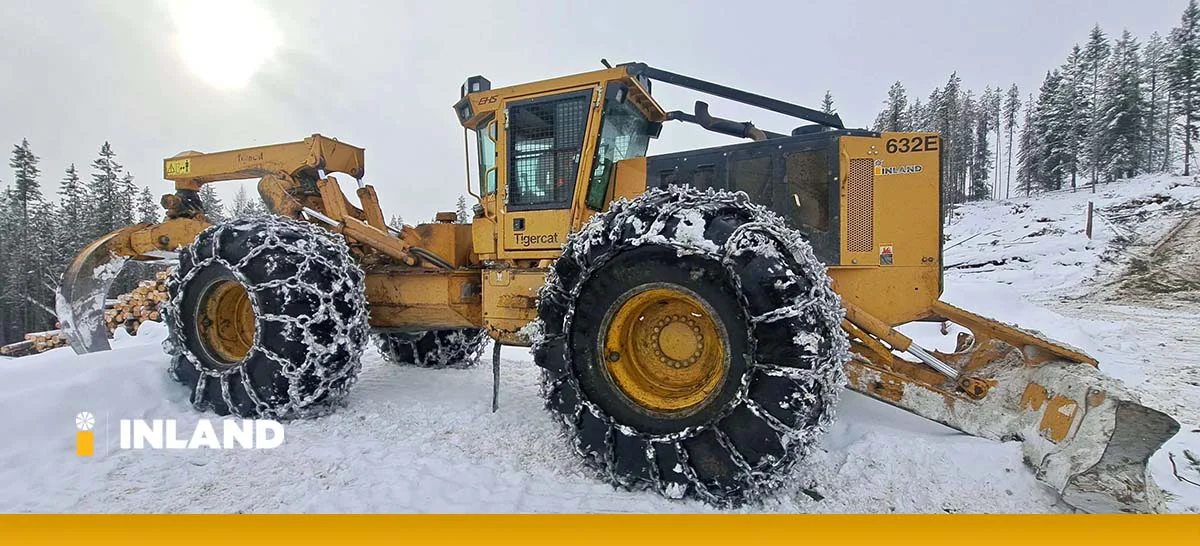
- Tire and suspension: Tires, tracks, chains, shocks, and suspension bushings.
- Fluid: Winter-grade lubricants, anti-gel fuel additives, and concentrated antifreeze.

Get Your Fleet Ready for Winter With Inland Truck & Equipment
As winter approaches each year, you must prepare your heavy equipment for the severe cold. A single machine that won’t start can cost you the entire day’s revenue. That’s what you risk when leaving winter readiness to chance.
Inland is your winter-readiness partner. Check out our services and repairs, and let our certified technicians handle the checklist for you. If you prefer to handle the work in-house, order your parts online — we have equipment parts for all makes and models.
Find an Inland near you and confidently head into the season.