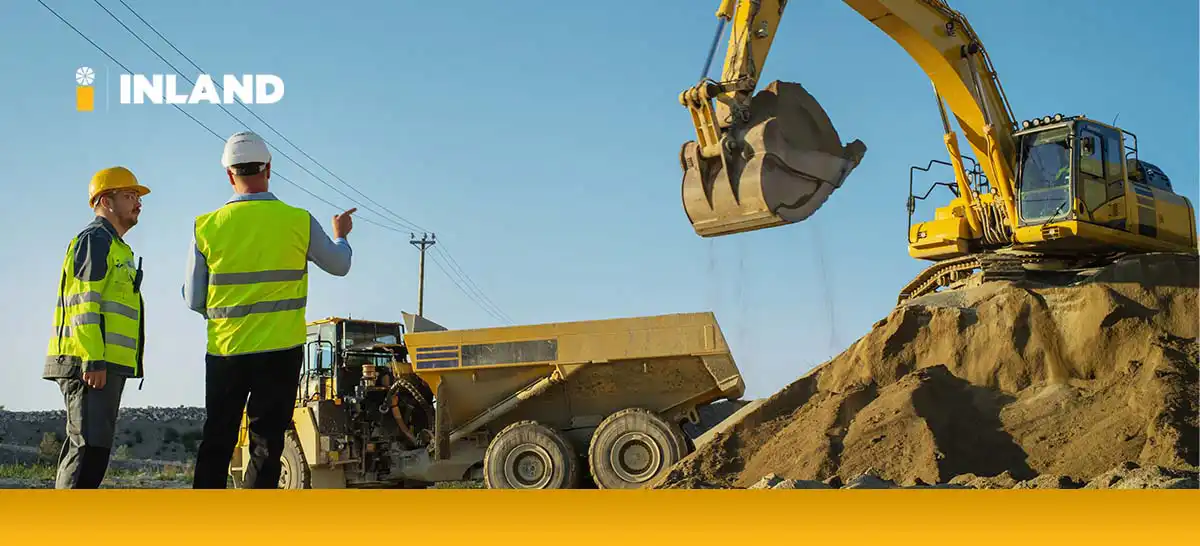
Heavy equipment operation ranks among the riskiest jobs on any Canadian construction or forestry site. In British Columbia, the workplace injury rate in construction hit 2.98 claims per 100 workers in 2022, 24% higher than the provincial average of 2.40, with mobile equipment strikes identified as a leading cause of serious jobsite injuries.
Heavy equipment operators need proper training to minimize the risk of injury to themselves, others, and equipment. If anything happens on-site, the employer or contractor may be held liable if they can’t prove that the operator was qualified. Furthermore, proper training, paired with OEM-scheduled service and regular maintenance, helps extend the lifespan of your heavy equipment and keeps a crew’s investment working harder for longer.
Recognized Certifications and Credentials in Canada
Certifications are the first thing to verify when vetting an operator, though credentials vary widely in scope and weight depending on the issuing body and equipment type.
Provincial Certificates of Qualification
Every Canadian province administers its own trades certification system. Some issue a Certificate of Qualification (C of Q) for heavy equipment operator trades, including excavators, backhoes, loaders, and dozers. The C of Q, or whatever the regional equivalent is called, is endorsement-specific, so a loader credential only covers loader operation.
The certification signals that the operator has completed a recognized training program and demonstrated competency against a provincial standard. In British Columbia, SkilledTradesBC governs heavy equipment operator certification through an employer-sponsored apprenticeship pathway that combines technical training with documented work-based hours, along with a challenge route for experienced operators with sufficient prior hours.
Contractors should confirm that an operator holds the proper certification for the equipment type they will operate on-site, regardless of the province where the crew operates.
Red Seal Endorsements and Interprovincial Portability
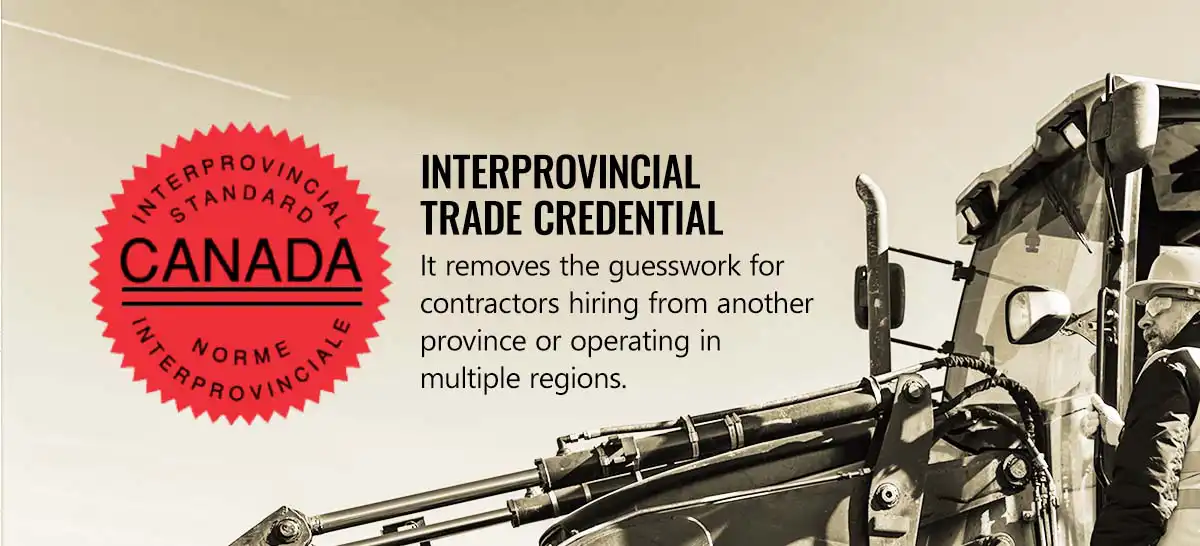
The Red Seal program is Canada’s national interprovincial trade credential. A Red Seal endorsement means the operator has passed a national standard exam and can work across provinces without requalifying, which removes the guesswork for contractors hiring from another province or operating in multiple regions. Heavy equipment operator Red Seal endorsements currently cover excavator, tractor-loader-backhoe, and dozer operation.
What Canadian Safety Laws Require of Employers
Across Canada, occupational health and safety (OHS) legislation places the responsibility for operator competency on the employer. As a result, every province requires employers to confirm workers are competent before operating equipment.
Competency standards and definitions vary by jurisdiction, but the Canadian Centre for Occupational Health and Safety (CCOHS) outlines several qualities that generally define a competent worker:
- Relevant knowledge, training, and experience: The worker holds the knowledge, training, and experience necessary to do the assigned job.
- Hazard awareness: The worker understands the hazards and risks tied to the specific task.
- Hazard control skills: The worker knows how to identify, assess, and control those hazards.
- Safety for the whole crew: The worker can do the job while protecting their own safety and the safety of others on-site.
- Regulatory knowledge: The worker understands the laws and regulations that apply to the work.
Contractors should confirm the exact competency requirements in the province or territory where the work is taking place. In British Columbia, for example, WorkSafeBC Part 16 governs training standards for mobile equipment, while Part 26 covers forestry operations. Both place the compliance burden on the employer. If an incident involves an undertrained operator, gaps in documenting competence can become a direct liability exposure for the contractor.
Training Records and Documentation
Practical documentation gives contractors a paper trail that supports every certification claim. Contractors operating anywhere in Canada should maintain some essential records, including:
- Operator logbooks: Keep detailed records of seat hours for each operator and machine type, including the specific equipment model and the work performed during each session.
- Employer declarations: Maintain formal statements confirming that a worker’s competency was verified before assignment, signed by the supervisor who observed and assessed the operator’s skills firsthand.
- Training program completion certificates: Retain proof that each operator completed a recognized training program for the equipment they operate, along with the training provider’s name and the completion date.
- Training records: Log who trained whom, when the training occurred, on which specific machine, and which skills or competencies the session covered.
This documentation is a contractor’s primary liability defense in any province. If an investigation follows an incident, these records serve as evidence that the employer exercised due diligence.
How to Evaluate a Heavy Equipment Operator Training Program
Certifications confirm an operator has completed a program, though program quality varies widely between providers. Contractors need clear criteria for evaluating a program before committing a crew to it.
Hands-On Seat Time vs. Classroom Hours
Hands-on competency separates a genuinely qualified operator from someone who has only completed a course. Any training program worth considering includes comprehensive machine time on equipment that matches what operators will actually run on-site. Training programs vary widely in how much of their curriculum happens behind the controls versus in a classroom. That ratio directly shapes how prepared an operator is on day one.
For instance, SkilledTradesBC requires operators to document a set number of operating hours before they can challenge for their certificate of qualification or endorsement:
- Excavator: 400 hours of operating time.
- Loader: 300 hours of operating time.
- Backhoe: 200 hours of operating time.
- Dozer: 200 hours of operating time.
Operators without an apprenticeship in British Columbia can pursue the trade qualifier challenge pathway instead, which calls for more documented hours, such as 600 hours for an excavator, 450 hours for a loader, and 300 hours for a backhoe or dozer.
The hours an operator spends running a machine under real working conditions are essential because CCOHS identifies sufficient experience as one factor in worker competency, alongside qualifications and training. A certificate alone represents only part of that standard. Consistent, hands-on practice also protects your equipment, since well-trained operators use proper technique that reduces strain on hydraulic systems and other components, extending the machine’s working life.
Accreditation and Instructor Credentials
Use this checklist to evaluate a program before enrolling your crew:
- Provincial recognition: Confirm the program appears on a recognized training provider list in your province.
- Instructor credentials: Instructors should bring documented, real-world field experience operating the specific equipment types they teach.
- Curriculum depth: Verify the curriculum covers core areas, including pre-operational inspection, safety protocols, hydraulic systems, and attachment operation.
- Certification pathway: Check that completion prepares operators for C of Q or Red Seal exam eligibility.
Supplemental programs, such as the BC Forest Safety Council’s RoadBuilding program, can add valuable, specialized skills that complement core certification.
Get the Right Equipment for Your Trained Crew at Inland Truck & Equipment
A certified operator behind the controls of CASE construction equipment or Tigercat forestry equipment protects your crew, your timeline, and your bottom line.
At Inland Truck & Equipment, we support contractors who’ve done the work of building a properly trained team, offering new and used equipment alongside heavy equipment service and repair and parts support. With dealerships across Western Canada, spanning British Columbia, Yukon, Saskatchewan, and Manitoba, and over 70 years of experience, Inland is a dependable partner for contractors who need equipment they can rely on. Offerings may vary across locations. Request a quote or find your nearest Inland dealership today.